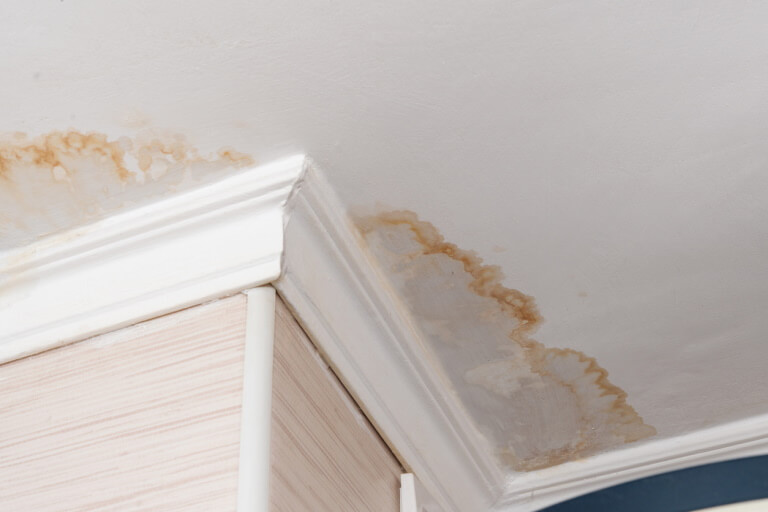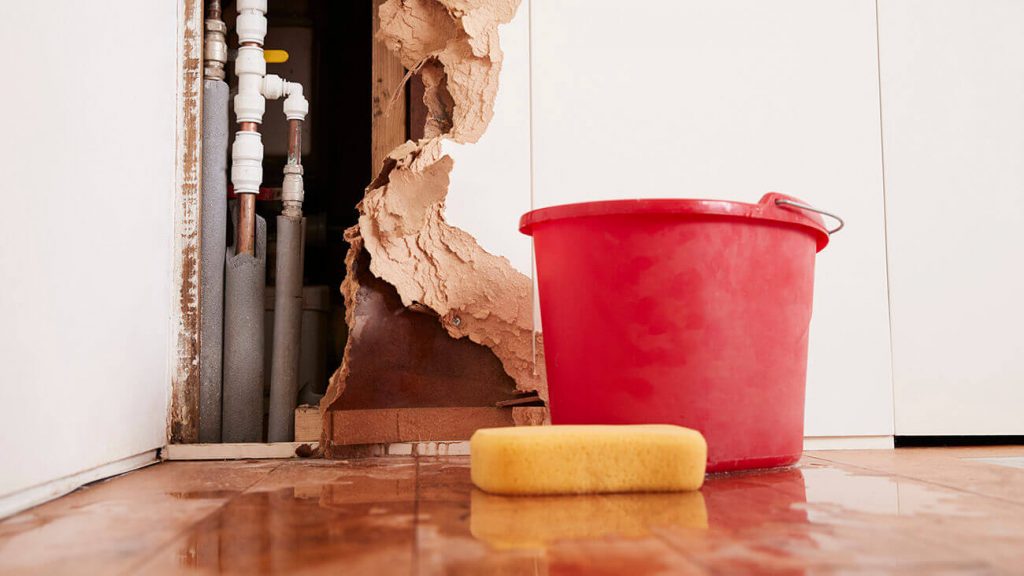
Homeowners insurance covers water damage when the cause is sudden and accidental, such as a burst pipe or a ruptured water heater. It does not cover water damage that develops gradually, such as water slowly seeping behind a wall, or damage caused by outside flooding. This distinction between sudden and gradual water events determines the outcome of most water damage claims filed in the United States.
Water damage and freezing claims accounted for approximately 22.6% of homeowners insurance claims in 2023, ranking second only to wind and hail, according to the Insurance Information Institute. The average severity of a water damage and freezing claim was $13,954 between 2018 and 2022. This combination of frequency and cost makes water damage one of the most consequential risks a standard homeowners policy addresses.
A standard HO-3 policy responds to water damage through two main components. Dwelling coverage pays to repair the physical structure, including floors, drywall, and cabinetry. Personal property coverage pays to repair or replace belongings damaged by the same event. Neither component pays to repair or replace the pipe, appliance, or roof section that caused the water to escape, since that repair is treated as routine maintenance rather than a covered loss.
Coverage for water damage also depends on the water's source and destination. Water that originates inside the home, such as from plumbing or an appliance, is evaluated differently than water that enters from outside, such as rainfall, groundwater, or a rising river. Homeowners who understand this framework, along with the optional endorsements available to close common gaps, are better positioned to avoid a denied claim.
Not sure what your policy actually covers? Call Avner Gat, Inc. The first call is free, and our team brings 20 years of experience helping California homeowners understand and negotiate water damage claims.
What Counts as "Covered" Water Damage: Sudden vs. Gradual Damage
Water damage counts as "covered" when it results from a sudden and accidental event rather than a condition that developed over time. An insurance adjuster investigates the source and timeline of the water intrusion to classify it into one of these two categories, and that classification decides whether the claim is paid or denied.
Adjusters rely on physical evidence to distinguish the two. Fresh water stains, an intact surrounding structure, and a clearly identifiable point of failure, such as a split pipe, support a sudden-loss classification. Discolored rings from repeated soaking, warped or deteriorated materials, corrosion at pipe joints, and visible deterioration suggest the damage accumulated over weeks or months. The same water source, such as a washing machine hose, can produce a covered claim in one household and a denied claim in another, depending entirely on how long the water was allowed to flow before detection.
Sudden and Accidental Damage (Usually Covered)
Sudden and accidental water damage is water damage that occurs without warning and without a gradual buildup, such as a pipe that bursts or a water heater tank that ruptures. Homeowners insurance covers this category because the policy is designed to respond to unexpected losses, not to the predictable failure of aging components.
Common examples include a supply line that separates from a washing machine, a frozen pipe that splits open (only covered if heat was furnished to the home), and a dishwasher hose that fails mid-cycle. In each case, the policy's dwelling and personal property coverage pays for the resulting damage to floors, walls, and belongings, provided the homeowner reports the loss promptly and had not ignored a known problem beforehand.
Gradual Damage, Wear, and Neglect (Not Covered)
Gradual damage, wear, and neglect are excluded from homeowners insurance because insurers classify these losses as preventable through routine maintenance rather than as unexpected accidents. A bathroom sink that has dripped for several months, a corroded supply line, or a slowly failing wax ring under a toilet all fall into this category.
Insurers deny these claims because the homeowner had the opportunity to notice and correct the problem before it caused significant damage. Continuous or repeated seepage over a period of time is a standard policy exclusion, and most policies also exclude damage from mechanical breakdown, rust, and corrosion. Replacing worn hoses, monitoring appliance connections, and addressing small problems immediately are the primary ways homeowners avoid this exclusion.
Types of Water Damage Homeowners Insurance Typically Covers
Homeowners insurance typically covers five common types of water damage: burst or frozen pipes, slab water intrusion, water heater failures, washing machine and dishwasher failures, and roof damage caused by wind-driven rain. Each type qualifies for coverage under the same underlying condition — the water event must be sudden and accidental rather than the product of long-term wear.
These categories share a common structure. The policy pays for damage the water caused to the home and its contents, but it generally excludes the cost of repairing or replacing the pipe, appliance, or roofing material that failed. Understanding this line between "damage caused by" and "damage to" the failed component clarifies what a claim will and will not reimburse.
Burst or Frozen Pipes
A burst or frozen pipe is covered by homeowners insurance when the pipe fails suddenly and the home was heated adequately at the time of the freeze. Dwelling coverage pays for resulting damage to floors, drywall, and ceilings, while personal property coverage pays for damaged belongings.
Coverage for a frozen pipe depends on the homeowner's care in maintaining heat. If a home was left unheated, vacant, or under-insulated during freezing temperatures, insurers typically deny the claim on the basis that the freeze was preventable. Homeowners who travel during winter months reduce this risk by maintaining a minimum indoor temperature, insulating exposed pipes, and shutting off and draining outdoor spigots before a hard freeze.
Slab Water Intrusion
Slab water intrusion is a break in a water line running beneath a home's concrete foundation, and homeowners insurance covers it when the break results from a sudden and accidental event, such as a pipe that bursts under sudden pressure. Coverage typically extends to the water damage inside the home and to the cost of accessing the source of the water, including breaking through and replacing the affected section of slab.
Coverage rarely extends to the pipe itself. Most policies pay to tear out and replace the concrete needed to reach the break, plus the resulting damage to flooring, drywall, and personal property, but exclude the cost of repairing or repiping the plumbing line. Slab water intrusion caused by corrosion, age, or ground shifting over time is treated as gradual damage and is typically denied. Homes on slab foundations in regions with shifting or expansive soil, including many parts of California, face elevated exposure to this risk because of soil movement and pipe corrosion.
Water Heater Failures and Bursts
A water heater failure or burst is covered by homeowners insurance when the tank fails suddenly, such as through a rupture or a pressure relief valve failure, causing water damage to the surrounding structure. Dwelling coverage pays to repair affected flooring, drywall, and baseboards, and personal property coverage pays for damaged belongings.
Coverage does not extend to the water heater unit itself when the failure results from age, sediment buildup, or corrosion, since these causes fall under a standard mechanical breakdown exclusion. Most water heaters have an eight- to twelve-year service life, and an insurer that finds evidence of a slow, pre-existing problem, rust, or an outdated unit at the time of failure may deny the entire claim, including the resulting water damage. Homeowners reduce this risk by replacing a water heater as it nears the end of its expected lifespan and by inspecting the unit for corrosion or discoloration.
Washing Machine and Dishwasher Failures
A washing machine or dishwasher failure is covered by homeowners insurance when the failure is sudden, such as a supply hose that bursts or an internal valve that fails without warning. Dwelling coverage pays for resulting damage to flooring, cabinetry, and subflooring, and personal property coverage pays for damaged rugs, furniture, and stored belongings.
The appliance itself is generally excluded from this coverage, along with any damage traced to a hose or gasket that had been visibly worn or failing before the loss. Insurers routinely deny claims when an inspection reveals a slow, pre-existing problem rather than a sudden rupture. Replacing rubber supply hoses with braided steel versions and inspecting connections monthly are common ways to prevent this type of loss.
Roof Damage and Wind-Driven Rain
Roof damage is covered by homeowners insurance when water enters through damage caused by a covered peril, such as wind, hail, or a fallen tree limb, rather than through gradual deterioration of the roofing material. Wind-driven rain, in which strong winds force water through small openings around flashing, vents, or shingles, is generally covered under the same standard.
Coverage depends heavily on the roof's condition before the storm. An insurer that determines water intrusion resulted from an aging roof, missing shingles that were never repaired, or accumulated debris in the gutters may reduce or deny the claim on maintenance grounds. A well-documented, regularly maintained roof improves the likelihood of a full payout after a covered wind or hail event, while flood-driven water that enters from ground level during the same storm falls outside homeowners coverage entirely.
Does Homeowners Insurance Cover Basement Flooding?
Homeowners insurance covers basement flooding only when the water comes from a sudden, internal source, such as a burst pipe or a failed appliance. It does not cover basement flooding caused by heavy rain, groundwater, or sewer and sump pump failures unless the homeowner has purchased a separate flood policy or a water backup endorsement.
This distinction surprises many homeowners because a flooded basement often looks the same regardless of its cause. An adjuster's first task is identifying where the water entered the home, since that single factor determines which policy, if any, responds to the loss.
Flooding from Rain or Groundwater (Not Covered)
Flooding from rain or groundwater is not covered by a standard homeowners insurance policy. Groundwater that rises after heavy rain or snowmelt and seeps through a basement's foundation walls, floor, or below-grade openings is treated as an excluded peril rather than a sudden, accidental loss.
Insurers exclude this water because it originates outside the home and because it typically develops gradually as pressure builds against the foundation. A separate flood insurance policy, most often issued through the National Flood Insurance Program, is the only way to cover this type of basement water damage. Homeowners with cracked or aging foundations face elevated exposure to groundwater seepage even in years without a declared flood event.
A Burst Pipe or Appliance Failure in the Basement (Covered)
A burst pipe or a sudden appliance failure in the basement is covered by homeowners insurance under the same sudden-and-accidental standard that applies elsewhere in the home. If a supply line ruptures or a water heater located in the basement fails without warning, dwelling and personal property coverage apply to the resulting damage.
This coverage treats the basement no differently than any other room, provided the source of the water is internal and sudden. A finished basement with flooring, drywall, and furniture increases the value at risk, which makes documenting the space's contents and condition useful before any loss occurs.
Sewer Backup and Sump Pump Failure (Needs an Endorsement)
Sewer backup and sump pump failure are not covered by a standard homeowners policy and require a separate water backup endorsement. The ISO HO-3 policy form explicitly excludes water or sewage that backs up through sewers, drains, or sump pumps and related equipment.
A sewer backup can occur when a municipal line clogs or a tree root invades a lateral pipe, forcing wastewater back into the home. A sump pump can fail due to a power outage, a mechanical breakdown, or a discharge line blockage, allowing water to accumulate in the basement. Both scenarios are covered once a water backup endorsement is added to the policy, and both remain uncovered without it, regardless of the extent of the resulting damage.
Homeowners Insurance vs. Flood Insurance: What's the Difference?
Homeowners insurance and flood insurance cover different sources of water damage: homeowners insurance covers sudden, accidental water events originating inside the home, while flood insurance covers water that enters from outside due to rising water, storm surge, or overflowing waterways. The two policies do not overlap, which means a single storm can produce damage that only one of them will pay for.
Flood insurance is typically purchased separately from a homeowners policy, most often through the National Flood Insurance Program (NFIP), a program administered by the Federal Emergency Management Agency (FEMA). Some private insurers also sell flood coverage, often with higher limits than the NFIP offers.
Why Standard Policies Exclude Flood Damage
Standard homeowners policies exclude flood damage because insurers classify flooding as a catastrophic, geographically concentrated risk that is priced and underwritten separately from ordinary household perils. A flood, defined as surface water that affects a broad area rather than a single dwelling, does not fit the individualized risk model that homeowners insurance is built on.
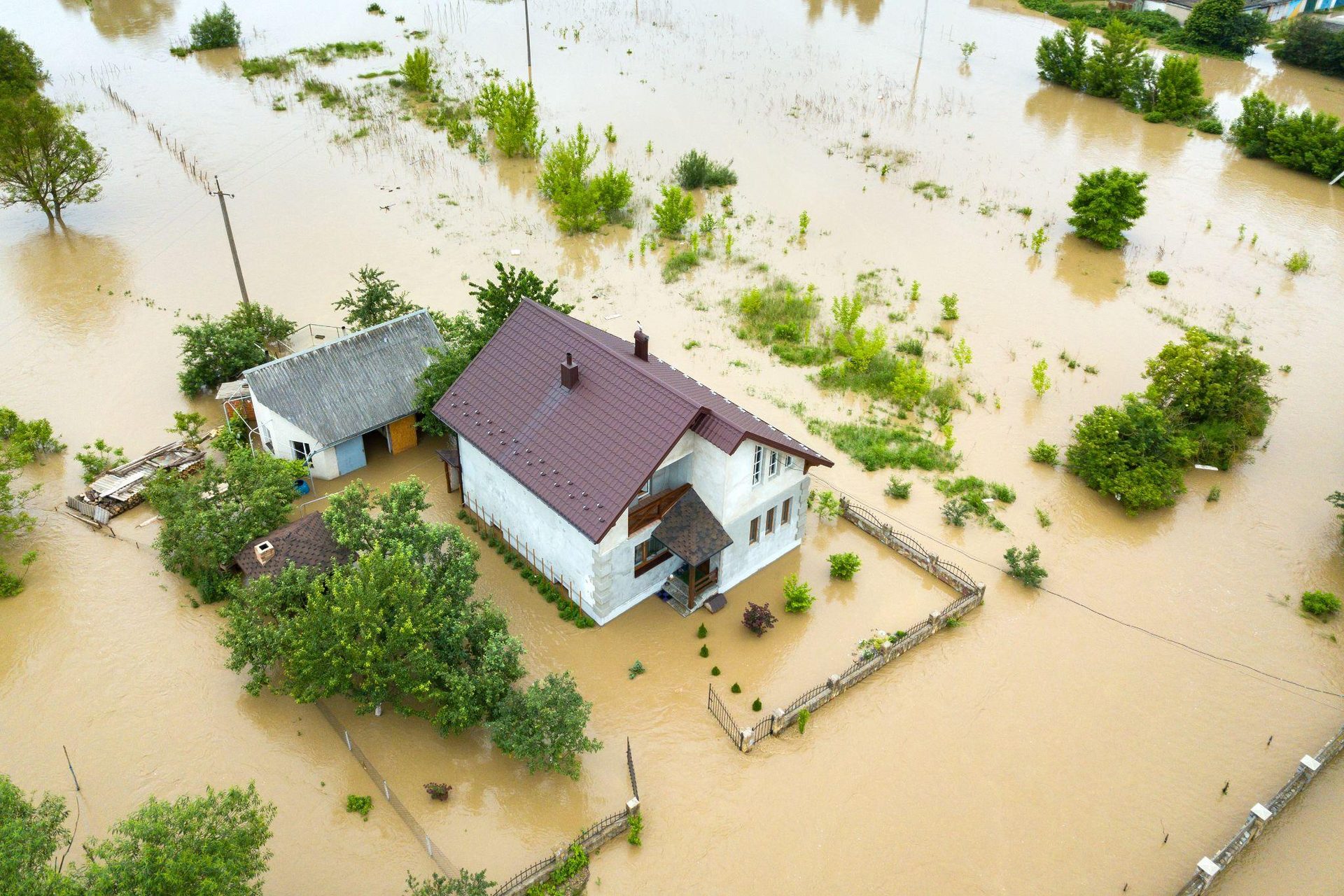
This exclusion applies regardless of what caused the flooding. Storm surge during a major coastal storm, an overflowing river, and heavy rain that pools around a foundation are all treated as flood events and are excluded from dwelling and personal property coverage. Homeowners insurance instead responds only to water damage that originates and stays within the boundaries of the insured structure.
When You Need a Separate Flood Insurance Policy
A separate flood insurance policy is needed whenever a home carries meaningful exposure to surface water, rising rivers, or storm surge, regardless of whether a lender requires it. Homeowners with a federally backed mortgage on a property in a FEMA-designated high-risk flood zone are required to carry flood insurance as a condition of the loan.
Flood risk is not limited to properties inside these designated zones. From 2014 through 2024, nearly one-third of NFIP flood claims came from areas outside FEMA's high-risk flood areas. A new NFIP policy typically carries a 30-day waiting period before coverage takes effect, so a policy purchased once a storm is already approaching will likely not provide coverage in time. Some private flood insurers offer shorter waiting periods, in some cases as little as zero to 14 days.
What Is Water Backup Coverage, and Do You Need It?
Water backup coverage is an optional endorsement added to a homeowners policy that restores protection for water or sewage that backs up through a sewer, drain, or sump pump system. It closes a gap left open by every standard HO-3 policy, which excludes this type of loss by default.
Water backup coverage is worth adding for most homeowners, particularly those with a basement, a sump pump, or a connection to a municipal sewer line. The endorsement is inexpensive relative to the cost of a single sewage backup, which can require structural repairs and personal property replacement.
What the Endorsement Adds to Your Policy
The water backup endorsement adds coverage for direct physical damage caused by water or sewage that backs up through a sewer or drain, or that overflows or discharges from a sump pump. It applies to a range of scenarios, including a sump pump that fails during a power outage, a clogged municipal sewer line, and a sump pump overwhelmed by heavy rainfall.
The endorsement typically covers structural repairs, damaged flooring and drywall, and ruined personal belongings that result directly from the backup event. It does not cover damage from groundwater seepage through the foundation or from surface flooding, both of which remain excluded even after the endorsement is added. Coverage limits for this endorsement typically range from $5,000 to $25,000 per occurrence, though some insurers offer limits up to the full replacement cost of the home.
Typical Cost of Water Backup Coverage
Water backup coverage typically costs $50 to $250 per year, according to industry pricing data from The Hanover Insurance Group. A base limit of $5,000 in coverage usually costs $30 to $70 annually, and each additional $5,000 in coverage adds roughly $25 to $35 per year.
This cost places water backup coverage among the least expensive endorsements available on a standard homeowners policy. A finished basement with expensive flooring, furniture, or stored belongings justifies a higher coverage limit, since a single backup event can produce tens of thousands of dollars in damage that would otherwise be paid entirely out of pocket.
Water Damage Exclusions: What Homeowners Insurance Won't Pay For
Homeowners insurance will not pay for water damage caused by neglect, long-term water intrusion, flooding, or earth movement. These exclusions apply regardless of how much damage results, because insurers classify each as either preventable through routine maintenance or as a catastrophic risk that falls outside the scope of a standard policy.
Recognizing these exclusions before a loss occurs helps homeowners identify which gaps require a separate policy or endorsement rather than assuming a standard policy responds to every type of water event.
Neglect and Lack of Maintenance
Neglect and lack of maintenance are excluded from homeowners insurance because insurers expect homeowners to identify and repair developing problems before they cause significant damage. A known, unrepaired water problem, a water heater kept in service well past its expected lifespan, and a roof with missing shingles that were never replaced all fall under this exclusion.
Insurers investigate the condition of the failed component to determine whether the damage was preventable. Evidence such as prior repair estimates, inspection reports noting existing issues, or visible corrosion at the point of failure typically supports a denial. Addressing small problems immediately and replacing aging appliances and roofing materials on a reasonable schedule are the primary ways to avoid this exclusion.
Long-Term Water Intrusion
Long-term water intrusion is excluded from homeowners insurance because it develops gradually rather than through a sudden event. Materials that stay wet for an extended period can begin to deteriorate within 24 to 48 hours of exposure, so even a covered sudden loss benefits from prompt drying and cleanup.
Most policies provide only limited coverage for damage that results directly from a covered peril, such as a burst pipe that was reported and remediated promptly. Damage traced to a long-standing, undetected water problem or groundwater seepage is typically excluded outright, even when a separate, unrelated event triggered a covered water damage claim. Reporting a water event and beginning drying within the first 24 to 48 hours materially improves the likelihood that the resulting damage remains covered. Because damage that has been present over an extended period generally does not meet the sudden-and-accidental standard, this type of claim isn't one a firm like Avner Gat, Inc. is able to take on.
Flood, Earth Movement, and Other Excluded Perils
Flood, earth movement, and similar perils are excluded from every standard homeowners policy regardless of the extent of the resulting water damage. Earth movement covers events such as earthquakes, landslides, and soil settling, each of which requires a separate policy or endorsement in the same way flood damage does.
These exclusions exist because the perils are catastrophic and geographically concentrated rather than isolated to a single household, which places them outside the risk pool that homeowners insurance is priced to cover. A homeowner facing meaningful exposure to any of these perils needs a dedicated policy, since no combination of standard endorsements restores this coverage to a homeowners policy.
How to File a Water Damage Claim with Your Homeowners Insurance
Filing a water damage claim with homeowners insurance starts with stopping the source of the water, documenting the damage, and contacting the insurer promptly to open the claim. Most insurers operate a 24-hour claims hotline, and prompt reporting is one of the strongest factors supporting a sudden-loss determination.
The remaining steps depend on the extent of the damage and the insurer's specific claims procedure, but the underlying sequence, documentation before cleanup, followed by an adjuster inspection and a settlement, remains consistent across insurers.
Documenting the Damage
Documenting water damage for an insurance claim means photographing and recording every affected area before any cleanup or repair begins. A continuous video walkthrough that narrates the water source, the extent of visible damage, and the materials affected creates a timestamped record that supports the claim.
Effective documentation also includes a written log of key events: when the damage was discovered, when the insurer was contacted, and any mitigation steps taken in the meantime, such as shutting off the water supply. Homeowners should keep receipts for emergency repairs and temporary accommodations, and should photograph demolished materials before disposal, since an adjuster may request to review them.
What Happens During the Claims Process
During the claims process, the insurer assigns an adjuster who inspects the home to verify the source of the water and determine whether the loss meets the sudden-and-accidental standard. The adjuster examines the failed pipe, appliance, or roof section, uses moisture meters or infrared cameras to map the extent of water migration, and photographs the damage to calculate repair costs.
The adjuster also interviews the homeowner about when the damage was discovered and what mitigation steps were taken. Homeowners can support their position by obtaining independent repair estimates from licensed contractors and comparing them against the adjuster's assessment, since insurers are not obligated to match an outside estimate exactly. A policy's duty-to-mitigate clause generally requires homeowners to take reasonable steps to prevent further damage once a loss occurs.
Want a second set of eyes on your adjuster's assessment? Avner Gat, Inc. can review your claim and help make sure the documentation supports the full scope of your covered damage.
Average Payout for a Water Damage Claim
The average payout for a water damage and freezing claim was $13,954 between 2018 and 2022, according to Insurance Information Institute data. Individual settlements vary widely, ranging from under $1,000 for a small, contained loss to tens of thousands of dollars for damage involving structural repairs.
Payout size depends on several factors, including the water category involved, the square footage affected, and how quickly the source was addressed. Clean water from a supply line is the least expensive to remediate, while grey or contaminated water raises both the health risk and the scope of required repairs. Roughly 1 in 60 to 1 in 67 insured homes files a water damage or freezing claim each year, making it one of the most frequently filed types of homeowners insurance claim.
Common Reasons Water Damage Claims Get Denied
Water damage claims are most commonly denied because the damage is classified as gradual rather than sudden, because of a policy exclusion such as flood or sewer backup, or because of insufficient documentation. Water that slowly makes its way behind a wall over months is the single most frequent basis for denial.
Additional common reasons include late reporting, since waiting more than a few days to notify the insurer can suggest the damage was long-standing rather than sudden; failure to mitigate, when an insurer determines that delayed action allowed the damage to worsen; and evidence of a pre-existing condition, such as old water stains or prior repair estimates that predate the reported event.
How to Choose the Right Water Damage Coverage for Your Home
Choosing the right water damage coverage starts with identifying which risks a standard homeowners policy leaves uncovered for a specific home, then closing those gaps with a water backup endorsement, a flood policy, or both. The right combination depends on the home's location, foundation type, and plumbing and drainage systems.
A home with a finished basement and an aging municipal sewer connection carries different risk than a home on a slab foundation in a floodplain, so the appropriate coverage mix varies from one property to the next.
Signals You Should Add Water Backup Coverage
Signals that a home needs water backup coverage include having a basement, a sump pump, or a connection to a municipal sewer system, since each of these features raises the likelihood of a sewer or drain backup. A finished basement with flooring, furniture, or stored belongings increases the potential loss from this type of event and supports choosing a higher coverage limit.
Homes with older plumbing, outdated sump pumps, or a history of heavy local rainfall face elevated risk even if a backup has never occurred before. A single severe backup event can offset years of premium payments, which makes this endorsement a reasonable addition for most homeowners regardless of whether a backup seems likely in any given year.
Signals You Should Add Flood Insurance
Signals that a home needs flood insurance include being located in or near a FEMA-designated flood zone, having a lender that requires it as a condition of a mortgage, or sitting on ground exposed to heavy rain, snowmelt, or a nearby river or coastline. A lender requirement removes the decision entirely, since flood insurance becomes mandatory for the life of the loan.
Homes outside a designated high-risk zone are not automatically low-risk, since a substantial share of NFIP claims originate from areas that FEMA does not classify as high-risk. Homeowners weighing this decision should review current flood zone maps for their property and compare NFIP pricing against private flood insurance options, since private carriers may offer shorter waiting periods and higher coverage limits.
Water Damage Coverage for Condo and Renters Policies
Water damage coverage for condo and renters policies follows the same sudden-and-accidental standard as a standard homeowners policy, but the scope of what each policy protects differs based on ownership structure. A condo owner's HO-6 policy and a renter's HO-4 policy both exclude damage to the building's exterior structure, since that portion is covered by a landlord's policy or a condo association's master policy.
An HO-6 policy covers a condo unit's interior, including floors, walls, cabinets, and fixtures, along with personal property and liability, for sudden and accidental water damage from plumbing, heating, or a household appliance. The boundary between an HO-6 policy and the association's master policy depends on the master policy type: a bare-walls master policy leaves interior finishes to the HO-6 policy, while an all-in master policy covers interior renovations as well. A single water event, such as water entering from a unit above, can involve two separate HO-6 policies or a combination of a master policy and an individual HO-6 policy, depending on where the water originated and where it caused damage.
An HO-4 renters policy covers a tenant's personal property and liability but includes no coverage for the building's structure, since the renter does not own the unit. A renter's HO-4 policy responds to sudden and accidental water damage that ruins furniture, electronics, or clothing, while the landlord's own policy covers structural repairs such as flooring and drywall. Both HO-6 and HO-4 policies exclude flood damage and generally exclude sewer or sump pump backup, though water backup coverage is available as an endorsement on either policy type.
How Water Damage Coverage Differs by Insurer (Allstate, Progressive, USAA, State Farm)
Water damage coverage differs across Allstate, Progressive, USAA, and State Farm primarily in the optional endorsements each offers and the pricing of those endorsements, since all four insurers apply the same sudden-and-accidental standard to a base HO-3 policy. Every one of these insurers excludes flood damage and sewer or sump pump backup from a standard policy and requires a separate endorsement or policy to cover either risk.
Allstate and Progressive both offer a water backup endorsement, along with optional coverage for service lines and personal property replacement cost. Neither insurer's base policy differs meaningfully from the other's in how it treats a burst pipe or an appliance failure, since both rely on the same sudden-versus-gradual standard used industrywide.
USAA, available only to eligible military members and their families, generally offers more comprehensive standard coverage and a wider range of add-on options than Progressive, including water backup coverage alongside options such as earth-movement protection. In head-to-head comparisons, USAA has scored higher than Progressive and State Farm on overall coverage options, though State Farm and USAA both offer comparable water backup endorsements.
State Farm offers a water backup endorsement along with a Home Systems Protection option and service line coverage, giving policyholders a way to address both water backup and mechanical breakdown risk through the same carrier. Across all four insurers, the deciding factor for water damage protection is less about which company is chosen and more about which optional endorsements a homeowner selects, since the base HO-3 coverage for sudden and accidental water damage is substantially similar industrywide.
What Water Damage Restoration and Repair Typically Cost
Water damage restoration and repair typically cost $1,383 to $6,384, with a national average around $3,860, according to 2026 industry pricing data from Angi and HomeAdvisor. Costs scale primarily with the water category involved, the square footage affected, and how quickly a professional began mitigation after the loss occurred.
Restoration breaks into two distinct phases with separate pricing. Mitigation, which includes water extraction, structural drying, and sanitizing, costs $3 to $7.50 per square foot, with clean water from a supply line at the low end and contaminated grey or black water at the high end. Repair and rebuild work, including drywall, flooring, and paint, typically costs an additional $20 to $37 per square foot once mitigation is complete.
Delay increases cost substantially. A clean water event addressed within hours can cost roughly $1,500 to repair, while the same event left unaddressed for a day can exceed $8,000 once water spreads through subflooring and the water category worsens from clean to grey. Damage left wet for 24 to 48 hours or more carries added remediation costs and can push a total restoration bill well beyond $16,000 in severe cases. Homeowners filing an insurance claim for restoration costs should confirm that a contractor's estimate itemizes extraction, drying equipment, demolition, and rebuild separately, since insurers evaluate each phase against the policy's dwelling coverage limit.
Filing a water damage claim in California and want it done right?
Avner Gat, Inc. brings 20 years of experience to residential and commercial property claims across California. We do not charge any retainer. We are on a contingent-fee basis only, if we collect money from your insurance carrier for you, we will charge you our agreed percentage.